

As we live through the current AI revolution, the technology is opening doors to new possibilities, greater accessibility, and unprecedented innovation. Yet, alongside these opportunities come heightened risks and stronger threats. Recent studies show that global cyberattacks surged by 44% year-over-year¹, pushing organizations to respond by increasing their cybersecurity spending by 12.2%² and rapidly integrating artificial intelligence into their defenses – with nearly 67% of security operations centers now leveraging AI and automation³.
The rise of cloud-based technologies has made storing and managing sensitive information more efficient, but it has also expanded the attack surface for cybercriminals.
This raises a pressing question: Is AI making our digital environment safer, or is it equipping attackers with more dangerous tools than ever before?
A Unique Lens
Jonas brings a permanent acquirer lens to this topic. Our focus is pragmatic risk reduction for vertical market software businesses, not hype. It’s important to understand how AI is affecting cybersecurity and what steps owners and operators can take to better serve their specific industries, customers and workflows.
What is a Cyberattack and What Has AI Changed?
A cyberattack is a deliberate attempt to disrupt or compromise systems or data. Classic methods still dominate, but AI reduces attacker effort and increases scale and speed.
Common Attack Types
- DoS and DDoS – Overwhelm services with traffic and excessive requests, so legitimate users cannot access them.
- Phishing – Social engineering to trick users into sharing credentials or installing malware.
- SQL injection – Malicious code input that manipulates backend databases of websites.

What AI Adds For Attackers
- Hyper personalized phishing at scale – Language models generate convincing emails, texts, and chat messages targeted to roles, industries, and even current projects.
- Synthetic media – Voice cloning and deepfake video for business email compromise or fraudulent payment requests.
- Automated reconnaissance – ML models scan public code, documents, and configuration files to prioritize exploitable weaknesses.
- Evolving payloads – Automated mutation helps malware avoid signature based detection.
- Model aware exploits – Prompt injection and data poisoning attacks that target AI assistants, chatbots, and recommendation engines embedded in products.
Where AI Strengthens Defense
AI is most valuable when it helps small teams focus on the highest impact work and shortens the time between detection and response.
- 24×7 monitoring that learns – Anomaly detection across identity, network, and application logs to flag unusual behavior in near real time.
- Faster triage and response – AI copilots summarize alerts, identify likely root cause, and suggest playbook actions so analysts can fix issues quickly.
- Continuous testing – Simulated adversary behavior and automated red teaming to surface blind spots before attackers do.
- Zero trust alignment – Risk based access controls, strong authentication, and least privilege policies that adapt to context.
- Software supply chain integrity – AI assisted code review, dependency mapping, and software bill of material policy checks inside the continuous integration pipeline.

Practical Steps for Vertical Market Software Businesses
These recommendations emphasize durable controls that compound, not one-off tools.

2) Put guardrails around AI use cases
Label every AI feature by the risk of the actions it can take and keep a human in the loop for anything that moves money, changes access, or edits records. Add simple content filters, defend against prompt manipulation, and restrict which tools an AI can use.

3) Harden the basics first
Turn on multi-factor authentication for everyone. Use endpoint protection that can isolate risky devices, default to least privilege, and review access on a regular schedule.
4) Build an AI aware incident response plan
Write playbooks ahead of time for deepfake fraud, misuse of AI features, accidental data leaks, practice them with executives, finance, legal, and support. Decide when and how you’ll notify customers and keep clear templates ready.

5) Secure the software supply chain
Ask vendors for a software bill of materials for any code or models you use, and scan AI-generated code like any other. Ship only when security tests pass, not because a date is on the calendar.
6) Measure what matters
Track time to detect and time to respond instead of ticket counts, and tame false positives so the team isn’t overwhelmed. Watch for early warning signs like unusual data movement and sudden privilege increases.
Conclusion
As artificial intelligence continues to evolve, its role in cybersecurity grows more complex. On one hand, AI serves as a powerful guardian, capable of monitoring systems 24/7, detecting threats in real time, and learning from past attacks to build stronger defenses. On the other hand, the same technology can be weaponized by malicious actors to launch more sophisticated, faster, and harder-to-detect cyberattacks.
In the end, AI is neither inherently good nor bad, it’s a tool. What matters most is how we choose to use it, and how prepared we are for the challenges it brings.
At Jonas, we emphasize durable security practices, data stewardship, and rightsized AI that compounds value for customers over time.
Sources:
- Check Point Software’s 2025 Security Report Finds Alarming 44% Increase in Cyber-Attacks Amid Maturing Cyber Threat Ecosystem – Check Point Software
- Worldwide Security Spending to Increase by 12.2% in 2025 as Global Cyberthreats Rise, Says IDC
- Pulse of the AI SOC Report 2025 – Cybersecurity Insiders
Contact Us to Learn More
Recent Posts
Total Service and Constellation Payments Showcase the Power of Collaboration Across the Constellation Ecosystem
One of the advantages of being part of the Jonas Software and Constellation Software ("CSI") ecosystem is access to a broad network of businesses...

Navigating Success: John Corley
Thought-Leadership Insight with John Corley We caught up with John Corley – President of the Club Division at Vertus Group, to talk about his...
Vesta Software Group Acquires Zoo Logic
Buenos Aires, Argentina, September 15th 2026 – Vesta Software Group is pleased to announce the acquisition of Zoo Logic, an Argentine...
Vesta Software Group Acquires Aucxis BV
Wallingford, Oxfordshire, September, 10, 2026 - Vesta Software Group ("Vesta") is pleased to announce the acquisition of Aucxis BV ("Aucxis"), a...

Why I Sold – Acquisition Stories with Kate Rhind, Healthpoint
We caught up with Kate Rhind, the founder of HealthPoint, and current CEO of Healthpoint. To talk about the acquisition process for the New Zealand...
AI Is Making Education Accessible Again
For a long time professional education was gated. To learn about advanced finance, you went back to school. To deepen your technical skills, you...

Career Progression Stories: Tim de Groot
We caught up with Tim de Groot, the CEO of Shortcuts Software, to talk about his career progression story before Jonas and since he joined the...

Selling to Jonas or Taking VC Investment: Understanding the Differences
If you've built a successful software company, you've probably been approached by venture capital ("VC") firms. They'll talk about accelerating...
Vertus Group Acquires Delineate
Llandysul Wales, UK – Vertus Group, a division of Jonas Software, is pleased to welcome Delineate, a research technology company that gives brands...
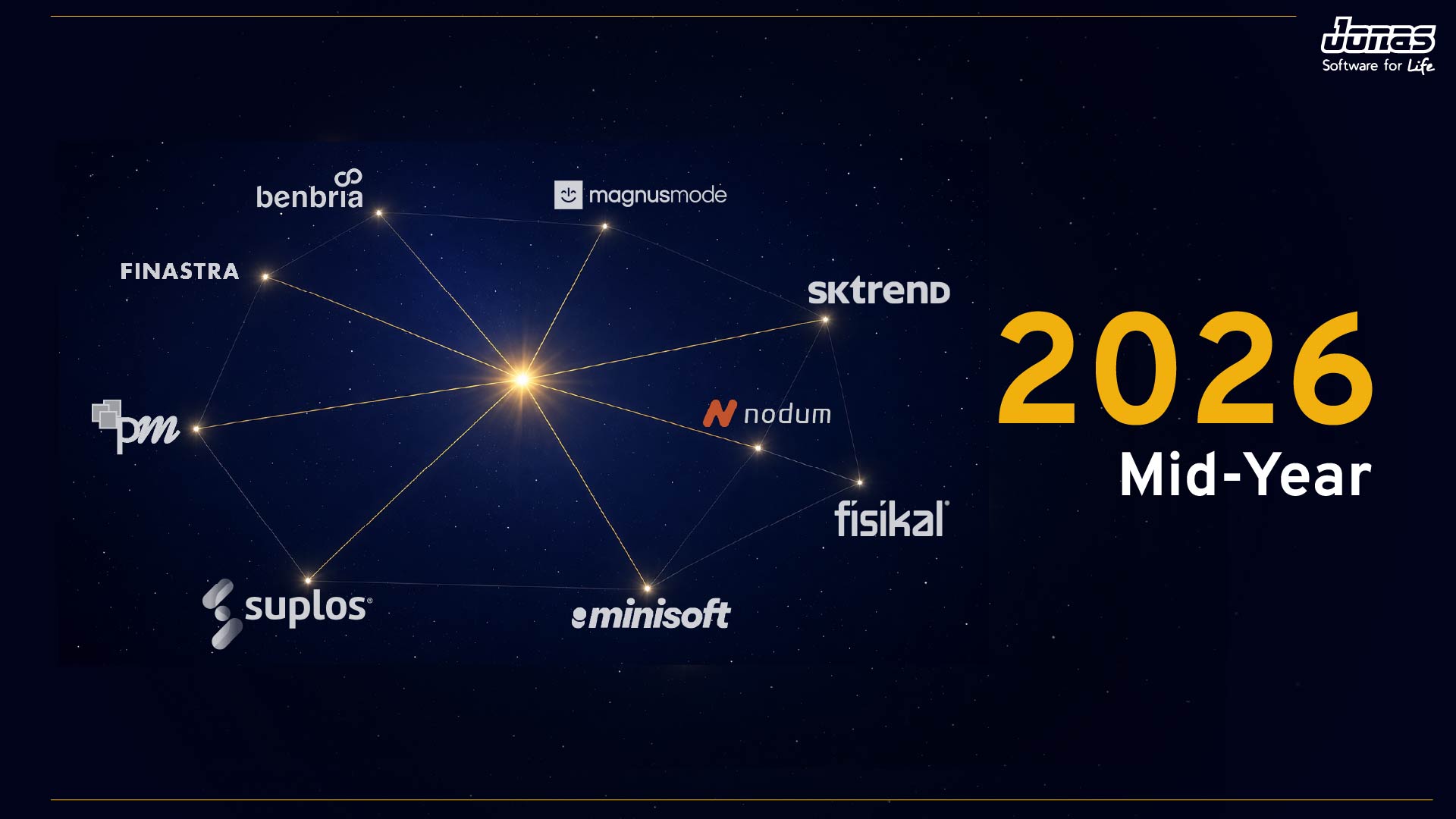
2026 Mid-Year Review
2026 has already proven to be a milestone year marked by exceptional growth for Jonas Software. Here's a quick snapshot of our accomplishments so...

Advice for Software Business Owners Considering a Sale
Selling your software company is one of the most significant decisions you'll ever make. The process takes time, careful planning, and thoughtful...

Career Progression Stories: Abram Bobis
We caught up with Abram Bobis, the General Manager of Theta Technologies. To talk about this career progression story with Theta and now at...